
What are the three big risks?
1. Recession
The risks of a recession are higher in Europe than in the US – and mostly that’s down to the Russia-Ukraine war and sharply higher energy costs. And the economic slowdown in China has everyone feeling the pinch: it’s been one of the world’s key economic drivers but now is seeing meager (for China) growth of less than 3% per year.
For the US, meanwhile, Blackstone uses a six-point checklist to determine when a recession has hit. And the world’s biggest economy already has four checkmarks. That means just two remain unchecked – unemployment hasn’t spiked, and estimates for corporate profit growth haven’t turned negative. But Blackstone expects that both may soon happen – and it’s not alone in that view. A recent Bloomberg survey showed that 75% of economists expect the US to be in a recession in the next 24 months.
2. Inflation
While inflation may have peaked for this cycle, Blackstone expects it to remain sticky (i.e. higher for longer) and that’s largely because some key components of inflation – shelter (notably: rent) and wages – have risen by so much. The asset manager’s experts don’t see an easy fix to the country-wide housing shortage, and so they expect rents to remain high.
There are 13 inflation charts in the quarterly report, but here’s one I found particularly interesting. These different inflation measures all show how high inflation is. One of these, the Cleveland Fed 16% trimmed-mean (gold line) is the measure that the Fed referred to when arguing that the current inflation was transitory. This measure removes the top and bottom 8% parts of the basket, and assesses the price increases on what’s left in the middle. Until recently, those price rises were well contained at around 2%, but now it’s also exploded higher.
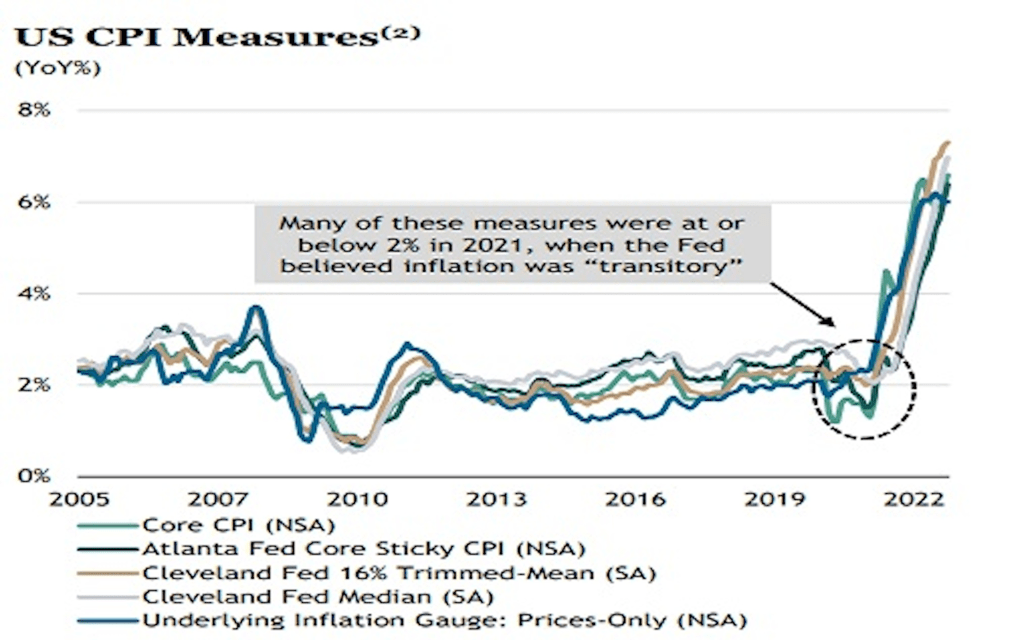
This is significant: the longer inflation and interest rates stay high, the more pressure there’ll be on companies’ profit margins. That’s why Blackstone expects estimates for the S&P 500 to be revised downward for next year, and sees market valuation multiples becoming more expensive.
3. Global interest rate hikes
In 50 years of data, we’ve never seen monetary tightening (chiefly: interest rate increases) at this intensity on a global scale (black line). And this increases the risk of “something breaking” – in other words, something going very wrong in the economy. You can see from the chart, in previous tightening cycles, it’s when an unforeseen crisis has occurred.
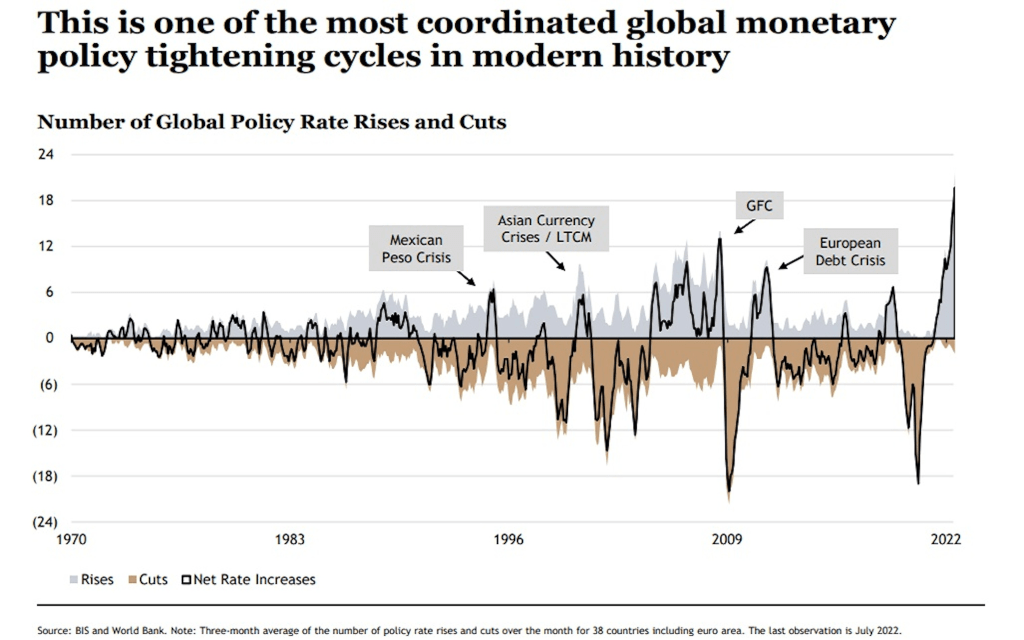
What’s more, Blackstone takes a look at the US central bank’s key interest rate, the fed funds rate (in gold) – and notes that it’s always higher than the inflation rate (green line) before the Fed’s tightening cycles end. So we can’t really expect to see a cut in the interest rate until the inflation tiger has been properly tamed.
What is the opportunity?
It’s not all bad news. Crowd sentiment is particularly low now (green line, lower chart), and that typically signals the potential for investment opportunities..
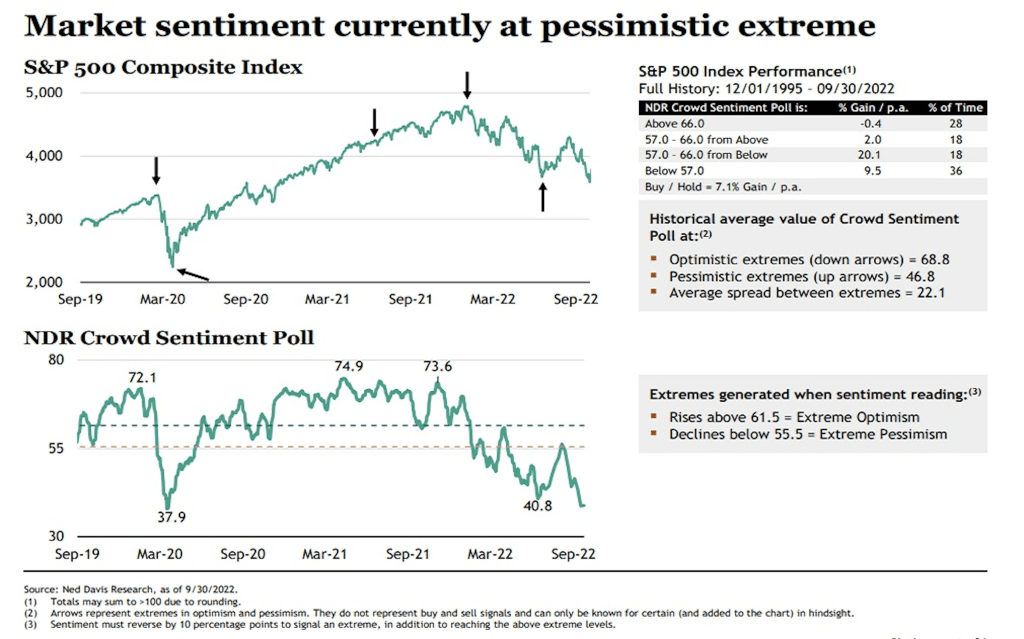
Blackstone vice chairman Byron Wien co-authored the quarterly outlook, and in presenting it to investors recently, he quoted Warren Buffett, reminding them of the wisdom of being fearful when others are greedy, and greedy when others are fearful. It’s how you can best position yourself to benefit from a rally.
As Blackstone specializes in alternative investments, it recommends very short-term maturity 1-year mortgage bonds and other private-equity-type investments. That may not be really accessible for retail investors, however. Instead, you could consider investing in shorter-maturity government bills and bonds, and higher-quality investment-grade corporate debt. The Vanguard Short-Term Treasury ETF (VGSH US; 0.04%) invests in 1-year to 3-year US government bonds.
Blackstone also noted that many companies have taken advantage of the long period of ultra-low interest rates to refinance their borrowing at cheap rates, so many have less immediate funding needs – which places them in a strong position. So the riskier idea would be in high-yield bonds, and for that, the iShares iBoxx High Yield Corporate Bond ETF (HYG; 0.48%) could be a good bet.
 The GillPower