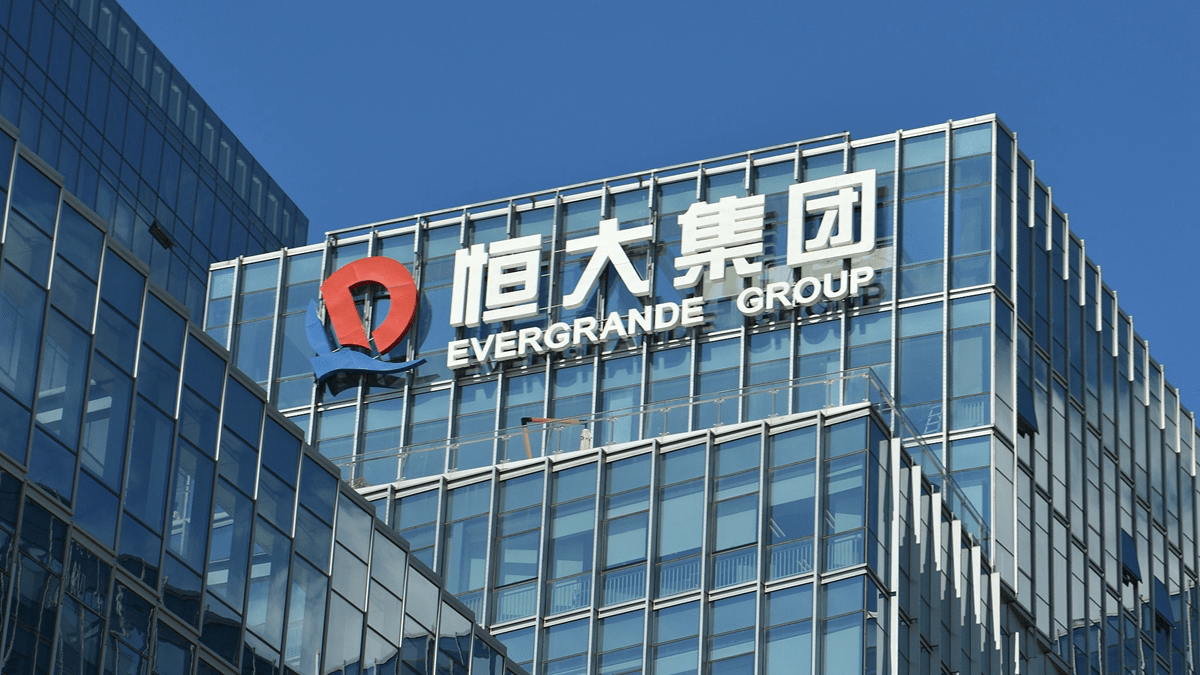
Wall Street stocks dropped on Monday, echoing falls in Asia and Europe, as the liquidity crisis at Chinese property developer Evergrande cascaded across global markets. The S&P 500 fell 2.1 per cent, while the tech-heavy Nasdaq Composite slipped 2.6 per cent. The Vix, which measures expected volatility on the S&P, hit 26.5 — around its highest level since May. Monday’s selling came after shares in Evergrande, the world’s most indebted property developer, closed 10 per cent lower in Hong Kong to their weakest level since May 2010.
The broad decline underscored concerns about the broader health of China’s real estate sector and triggered a wider sell-off, sending the Hang Seng Property index, which tracks a dozen listed developers, down almost 7 per cent, to its lowest point since 2016. At 24,099 points, Hong Kong’s broader Hang Seng index closed at its lowest level since October 2020.
Evergrande faces obligations of more than $300bn to creditors and other businesses, and a crucial interest payment deadline on its offshore bonds looms on Thursday.

Evergrande, whose share price has tumbled since it warned of the risk of default last month, said senior executives would suffer “severe punishment” after securing early redemptions on investment products it later told retail investors that it could not repay on time. Trading in Hong Kong indicated that the deepening fears for the property sector were dragging on other developers and financial institutions. “Evergrande is just the tip of the iceberg,” said Louis Tse, managing director at Wealthy Securities, a Hong Kong-based brokerage. Chinese developers were under substantial repayment pressure on dollar-denominated bonds, he added, while markets had become nervous that Beijing would push listed real estate groups to cut the costs of housing in mainland China and Hong Kong. “That affects the banks as well — if you have lower property prices what happens to their mortgages?” Tse said. “It has a chain effect.”
Shares in Ping An, China’s biggest insurer, fell as much as 8.4 per cent on Monday, after closing down 5 per cent on Friday as it was forced to disclose that it held no exposure to Evergrande debt or equity. Ping An has Rmb63.1bn ($9.8bn) of exposure to the country’s real estate stocks across its Rmb3.8tn of insurance funds. Like US stocks, European markets also dropped on Monday, with the region-wide Stoxx 600 down 1.7 per cent. In debt markets, the yield on the 10-year US Treasury note, which moves inversely to its price, dropped 0.05 percentage points to 1.324 per cent, driven by haven buying. Germany’s equivalent Bund yield slipped 0.04 percentage points to minus 0.32 per cent.
The risk-off sentiment also dragged down the value of corporate debt. A widely watched exchange traded fund that tracks lower-rated, “high-yield” bonds and is known by its ticker HYG, dipped 0.4 per cent in US morning trading, on course for its worst one-day decline in two months. The cost of insuring high-yield debt from default in the derivative markets also rose sharply, in a further sign of investor nervousness.
Evergrande’s $4.7bn bond maturing in 2025 slumped below 25 cents on the dollar for the first time, as fears over the company’s collapse intensified. The bond traded above 80 cents as recently as May. Ming Tan, a director at credit rating agency Standard & Poor’s who follows Chinese banks, said Evergrande defaulting on its debts was unlikely to cause a credit crisis in the world’s second-largest economy “by itself”.
“Banks’ exposure to Evergrande is quite distributed across the sector,” he said. The main risk for China’s financial system would be “other highly leveraged developers to default at the same time”, he added. Metal prices also fell on Monday as concerns grew about the impact on commodity demand of a pullback in the Chinese property market. Iron ore dropped below $100 a tonne for the first time in more than a year. The steelmaking commodity that is a source of profit for major miners has plunged 23 per cent over the past week. In turn, mining stocks were among the biggest fallers on the FTSE 100 in London. Exchanges in mainland China were closed for a public holiday.
 The GillPower